







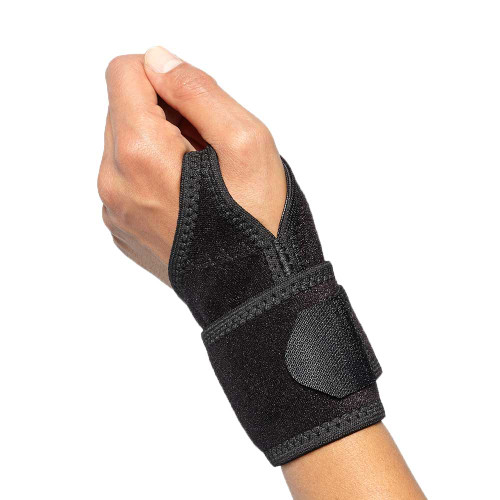


Find the Right Wrist Support
The right wrist brace depends on where you need support and how much movement needs to be controlled. A compression wrist wrap offers light support during daily activities, while a structured wrist splint provides greater stabilization. If the pain involves the base of the thumb, a thumb spica brace may be more appropriate.
Types of Wrist Braces and Supports
Wrist Splints
A wrist splint uses supportive stays to limit unwanted movement and keep the wrist in a more neutral position. Choose it when a flexible wrap does not provide enough stability.
BioSkin’s DP2 and DP3 wrist splints feature customizable aluminum stays that can be shaped to follow the contours of the wrist and hand. The open-finger design allows you to continue using your fingers for many everyday tasks.
Compression Wrist Wraps
A wrist wrap provides adjustable compression without fully immobilizing the joint. It is a lightweight option for mild wrist discomfort, repetitive activities and situations where greater freedom of movement is preferred.
The BioSkin Boomerang Wrist Wrap can be adjusted to provide light support during activities such as typing, lifting, cooking and gripping. Its compact design also makes it easier to wear during work and exercise.
Thumb Spica Braces
A thumb spica brace steadies the thumb while leaving the wrist relatively free. Its wrist compression strap adds adjustable support without locking the wrist in place.
Choose targeted thumb support for thumb sprains, pain at the thumb base or everyday tasks that aggravate the thumb. For De Quervain’s symptoms, check whether you also need a brace that restricts wrist motion.
Compare BioSkin Wrist Braces
DP2 Cock-Up Wrist Splint
The DP2 provides structured wrist support in a compact 6.5-inch design. Its removable and customizable aluminum stays help maintain wrist alignment while allowing the fingers and thumb to move.
Choose the compact DP2 for wrist sprains, repetitive strain or mild carpal tunnel symptoms when you want firm support without extended forearm coverage.
DP3 Cock-Up Wrist Splint
The DP3 has an extended 8.5-inch design that provides additional support along the wrist and forearm. Customizable stays help limit unwanted wrist movement while the fingers remain free for everyday activities.
Choose the longer DP3 when you want added forearm coverage and greater wrist control.
Thumb Spica Brace
The BioSkin Thumb Spica Brace stabilizes the thumb while leaving the wrist relatively free and the fingers open for everyday tasks. A separate wrist compression strap lets you adjust support.
Its adjustable closures make one-handed application easier when the other hand needs support.
Boomerang Wrist Wrap
The Boomerang Wrist Wrap provides light, adjustable compression around the wrist. It is designed for people who want support during work, exercise and repetitive activities without the structure of a full wrist splint.
This flexible wrist support can be tightened or loosened to match your preferred level of compression.
How to Choose a Wrist Brace
Identify Where You Need Support
Start by identifying whether the symptoms affect only the wrist or also involve the thumb. A standard wrist splint supports the wrist while leaving the thumb mobile. A thumb spica brace provides additional stabilization around the thumb joint.
Select the Appropriate Support Level
Choose a brace that provides enough stability without unnecessarily restricting the rest of your hand.
- Light support: Compression during daily activities and repetitive movement
- Moderate support: Wrist stabilization with limited unwanted movement
- High support: Greater wrist and forearm stabilization
- Targeted support: Thumb stabilization with a wrist compression strap
Choose the Appropriate Length
A shorter wrist brace offers a compact fit and may be more convenient for everyday activities. An extended wrist splint provides additional coverage along the forearm and may offer greater control over wrist movement.
The right length depends on your condition, activity and the level of stabilization recommended by your healthcare provider.
Review the Product Sizing Guide
A wrist brace should feel secure without causing pain, increased tingling, numbness, discoloration or changes in circulation. Measure your wrist according to the instructions provided on the individual product page and compare your measurement with its sizing chart.
Do not assume that every BioSkin wrist or thumb brace uses the same sizing method.
Wrist Braces for Common Conditions
Wrist Braces for Carpal Tunnel Syndrome Pain Relief
Carpal tunnel syndrome occurs when the median nerve is compressed as it passes through the wrist. Symptoms may include tingling, numbness, pain or weakness in the hand and fingers.
A DP2 or DP3 splint holds the wrist in a neutral position and reduces movements that aggravate carpal tunnel symptoms.
Wrist Braces for Sprains
A wrist sprain occurs when one or more wrist ligaments are stretched or torn. Depending on the severity of the injury, a wrist brace may provide stabilization while the injured tissues recover.
Wrist Braces for Arthritis
Wrist arthritis can make gripping painful and leave the joint stiff or swollen. A compression wrap can provide light support, while a structured wrist brace can limit movements that aggravate the joint.
Braces for De Quervain’s Tenosynovitis
De Quervain’s affects tendons along the thumb side of the wrist. Gripping, pinching and thumb movement can trigger pain in that area.
The Thumb Spica Brace steadies the thumb and adds wrist compression, while leaving the wrist relatively free. If your symptoms require the wrist to be held still, choose support with your clinician.
Braces for Thumb Sprains
A thumb sprain can occur when the thumb is bent too far away from the hand, stretching or tearing a supporting ligament. Skier’s thumb and gamekeeper’s thumb are common names for injuries involving the thumb’s collateral ligament.
A Thumb Spica helps steady the thumb and limit painful movement.
Why Choose BioSkin Wrist Braces?
Choose Boomerang for flexible compression, DP2 or DP3 for structured wrist control, or Thumb Spica for targeted thumb support with wrist compression. Rounded tabs and strap closures make adjustment easier with one hand.
- Soft, moisture-wicking lining on the Boomerang and Thumb Spica
- Lightweight and low-profile designs
- One-handed strap adjustment on DP2, DP3, Thumb Spica and Boomerang
- Rounded hook-and-loop tabs
- Customizable stays on selected wrist splints
- Multiple support levels
- Wrist splints and targeted thumb support
- Help from experienced brace specialists
- 30-day returns on unused products; see the return policy for details
- Free continental U.S. shipping on orders over $50
Need help choosing? Contact our brace specialists for assistance comparing wrist braces, support levels and sizing.
Frequently Asked Questions About Wrist Braces
The appropriate wrist brace depends on your symptoms and required level of support. A compression wrist wrap provides light support, while a structured wrist splint limits more movement. A thumb spica brace steadies the thumb while leaving the wrist relatively free.
“Wrist brace” is a broad term for products that support or stabilize the wrist. A wrist splint is a more structured type of brace that usually contains rigid or semi-rigid stays to limit movement.
A flexible wrist wrap provides compression while allowing greater mobility. A wrist splint provides more immobilization and support.
A wrist brace typically provides more structure and may contain supportive stays. A wrist wrap applies adjustable compression while allowing more movement.
Choose the Boomerang wrap for light support during activity or a DP2 or DP3 splint when you need firmer wrist control.
Some wrist splints are worn at night to keep the wrist in a neutral position, particularly when recommended for carpal tunnel symptoms. However, not every wrist brace is designed for sleeping.
Follow the product instructions for wear time.
A wrist brace should feel snug and secure without causing pain, increased numbness, tingling, discoloration or restricted circulation. You should be able to move your fingers comfortably unless your healthcare provider has instructed otherwise.
Loosen or remove the brace if it worsens your symptoms.
Many low-profile wrist braces allow finger movement and can be worn while typing. However, the brace may affect your hand position and comfort depending on its length and support level.
Adjust your workstation and take regular breaks if computer use aggravates your symptoms.
Use a flexible measuring tape and follow the sizing instructions on the individual product page. Most wrist braces require a circumference measurement around the wrist, but the exact measuring location can differ between products.
The Boomerang Wrist Wrap fits either wrist. DP2 and DP3 Cock-Up Wrist Splints have separate left- and right-hand versions.
The Thumb Spica steadies the thumb while leaving the wrist relatively free. It suits thumb sprains and pain at the thumb base; if wrist movement also needs to be restricted, compare a different design with your care team.
The adjustable thumb stay supports the thumb joint, while the wrist compression strap lets you fine-tune the fit.
Follow the care instructions included with your specific BioSkin product. Remove any detachable stays if instructed, secure the straps and use the recommended washing method. Allow the brace to dry completely before wearing it again.
When to see a professional
Seek medical advice after a significant fall or injury, for persistent numbness or weakness, or when pain or swelling worsens. A Thumb Spica leaves the wrist relatively free, so ask whether you need firmer wrist immobilization for your condition.